I had the opportunity to attend a music educators’ workshop held at Musashino Academia Musicae.
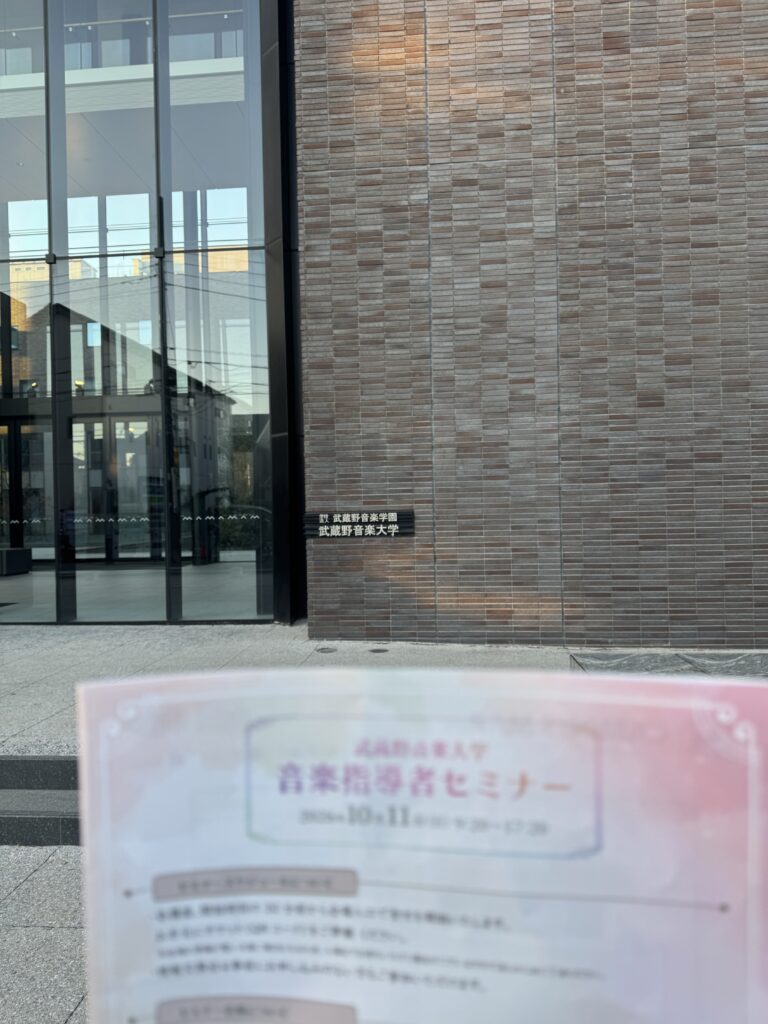
Throughout the day, I experienced many discoveries and deeply moving moments. It was a truly inspiring day that reminded me once again of the joy of continuing to learn through music.
Session 1: Wind Band Instruction
The first session featured a live demonstration of wind band instruction with high school students.
I was deeply impressed not only by the teacher’s outstanding guidance, but also by the students’ concentration and enthusiasm.
The lesson carefully covered each fundamental aspect of playing: sitting posture, how to hold the instrument, breathing exercises, tuning, and ways to create a rich and resonant harmony. Through the teacher’s skillful instruction and keen observation, as well as the students’ sincere and focused attitude, I was reminded of how important it is to build a strong foundation for making music.
After all this careful preparation, listening to the students perform Furusato, a beloved Japanese song, was deeply moving.
I was reminded that music can unfold with richness and beauty when we prepare carefully and steadily, one step at a time.
Session 2: Conducting
The second session focused on conducting, using Beethoven’s Symphony No. 1 as the main repertoire. We studied the first, second, and fourth movements, conducting performances by two pianists while receiving guidance from the instructor.
It was an exciting and inspiring experience that encouraged us to understand the music deeply, consider what we wanted to ask of the performers, and think about what we wanted to express.
What kind of tempo do the performers need to understand?
Who enters, and when?
What balance should the ensemble create?
Which melodic line should be brought to the foreground?
We also learned that getting performers to watch the conductor does not simply mean making larger gestures. It is important to attract their attention and guide their focus naturally toward the hands and gestures at the right moments.
Everything made perfect sense once it was explained, yet these were not necessarily things I would have noticed on my own.
I was fascinated by the depth of guiding music and felt a renewed sense of joy in music itself.
Session 3: String Ensemble Instruction
The third session was the one I had been especially looking forward to: string ensemble instruction.
The ensemble consisted of just under ten violinists, four violists, three cellists, and one double bassist—almost exactly the same instrumentation as Harmonia Ensemble Tokyo!
For that reason, I listened to the session with particular excitement.
What impressed me most was the concentration and awareness required to build each sound together, as well as the beautiful and thoughtful words the teacher used to draw out the students’ abilities. The instruction was deeply moving and created a wonderfully comfortable atmosphere.
I was touched by the thought that, through this kind of guidance, students could naturally learn to express their joy and love of music through sound.
What should the students listen for?
What should they develop?
What words would help them achieve it?
I was completely drawn into the way the teacher carefully chose each word while guiding the students toward a deeper musical understanding.
We explored the role each person plays within the ensemble, the kind of sound each musician creates, and the music we can shape together.
The students played melodies as a group and also took turns performing them. Through these different approaches, they deepened their understanding of the music. Each person learned to recognize their own role, listen to the surrounding sounds, and contribute to the overall resonance.
I was deeply moved to see how the performance became richer and more expressive through this gradual process.
Ensemble playing is not simply about performing together. It is about listening to one another, understanding each other, sharing the music, and creating one unified sound.
I hope to bring what I learned into the activities of Harmonia Ensemble Tokyo.
Session 4: Video Production and Sharing Music
The final session explored the techniques and possibilities of filming, editing, and sharing music—skills that are becoming increasingly important in today’s musical activities.
Being a musician is not only about performing. It is also about considering how to record, edit, and share music with a wider audience. There are many possible applications, including educational purposes, promotion, and documenting performances.
I was amazed to realize that such practical skills can now be studied as part of music education. At the same time, I was reminded of the importance of continuing to learn as the musical world changes with the times.
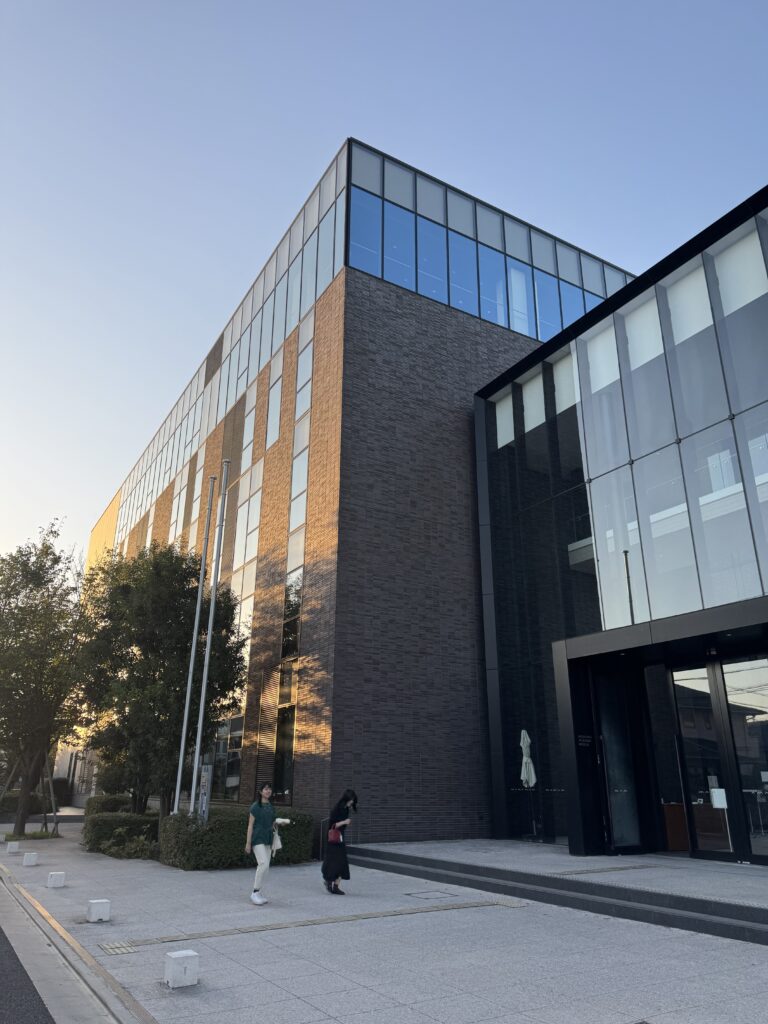
I was truly happy to have the chance to speak with the teacher directly, and I returned home feeling deeply inspired and grateful.